Landscape Lighting 101: Enhance Safety and Curb Appeal After Dark
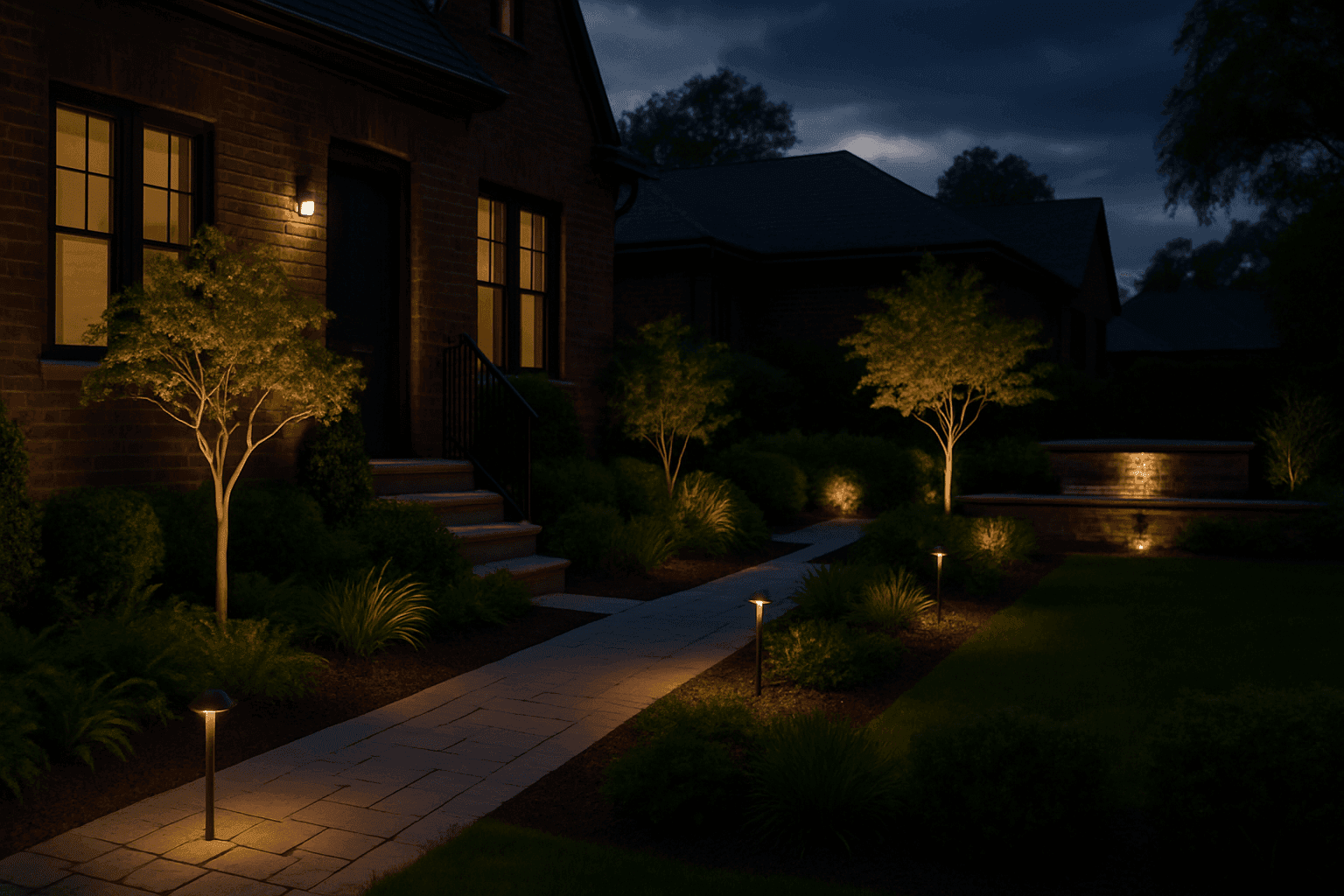
When the sun sets, your home shouldn’t disappear. The right landscape lighting can turn a dark, uninviting yard into a warm, welcoming retreat. It’s more than just a pretty glow—well-planned lighting keeps your walkways safer and sends would-be prowlers looking elsewhere.
At River Rock Landscaping, we know residential landscaping is about peace of mind as much as picture-perfect looks. If you’re wondering how to light up your property safely and stylishly, you’re in the right place.
Why Landscape Lighting Matters 🌙
Picture this: You’re coming home late. The garden beds you love are hidden in shadow, the path is a guessing game, and the front steps? A stumble waiting to happen.
Landscape lighting isn’t just about showing off your favorite tree or making your mailbox pop. It’s a double-duty hero, helping prevent trips, falls, and unwanted visitors while making your yard shine for all the right reasons.
Dual Purpose, One Solution
- Safety: Lights along paths and steps help everyone see where they’re going, even on the darkest nights.
- Security: A well-lit yard deters trespassers and helps you spot movement outside.
- Curb Appeal: The right lighting draws attention to your home’s best features—think of it as highlighting your home’s best angles.
- Usability: Extend your outdoor living. With the right illumination, patios, fire pits, and garden beds become usable after dusk.
According to the Illuminating Engineering Society (IES), strategic lighting is key for both aesthetics and accident prevention.
Types of Outdoor Lighting
Choosing fixtures can feel overwhelming. But think of it like picking tools for a job—each one has its purpose.
- Path Lights: Short, downward-facing lights that guide footsteps along walkways, garden borders, and driveways.
- Spotlights: Focused beams that highlight trees, statues, or stonework.
- Accent Lights: Subtle, often hidden, these add drama to flower beds, water features, or architectural details.
- Flood Lights: Bright and broad, these cover large spaces like lawns or driveways for general security.
- Step and Deck Lights: Mounted on vertical surfaces to illuminate stairs and seating areas.
- String or Bistro Lights: Add ambiance over patios and seating nooks.
- Solar and LED Options: Energy-efficient and long-lasting—LEDs are cool to the touch and cheap to run.
Mixing and matching types lets you highlight your favorite features and keep every corner safe.
Safety and Security Benefits
Lighting is like a silent guardian for your yard.
- Trip Prevention: No more missed steps or twisted ankles when the path is clear.
- Crime Deterrence: Studies from the U.S. Department of Justice show well-lit properties are less likely targets for theft and vandalism.
- Visibility: Guests, delivery drivers, and family can navigate confidently.
- Emergency Access: First responders can find your home faster if every entrance is visible.
Tip: Avoid blinding glare. Aim for gentle, even pools of light—think moonlight, not stadium floodlights.
DIY vs. Professional Installation
Some projects are perfect for a weekend. Others need a skilled touch.
When DIY Makes Sense
- You’re adding solar path lights or plug-in string lights.
- The project doesn’t require digging, wiring, or modifying electrical systems.
- You’re comfortable with minor handiwork.
When to Call a Pro
- You want hardwired fixtures or smart system integration.
- Your design involves transformers, code compliance, or complex zones.
- You’re dealing with slopes, retaining walls, or want lighting built into patios or walkways.
Professional installers, like River Rock Landscaping, ensure everything’s up to code (see National Electrical Code guidelines), safely grounded, and built to last.
Tips for Placement and Design
Light placement is both art and science. Here’s how to get it right:
- Highlight, Don’t Overwhelm: Focus on focal points—entryways, specimen trees, water features.
- Layer Your Lighting: Combine path, accent, and ambient lights for depth.
- Mind the Neighbors: Angle fixtures downward or shield them to avoid light trespass and pollution (DarkSky.org offers great guidance).
- Integrate With Smart Systems: Use timers or motion sensors to save energy and add convenience.
- Test Before Installing: Use temporary lights at night to preview effects before setting anything in stone.
Maintenance and Upkeep
Lighting isn’t a “set it and forget it” investment. Keep it looking its best with simple seasonal care.
- Clean Lenses: Dirt and debris can dim even the brightest fixtures.
- Check Wiring: Inspect connections, especially after storms.
- Replace Bulbs: Use matching wattage for safety and even coverage.
- Trim Plants: Overgrown shrubs can block beams and create shadows.
- Test Timers: Update settings for daylight savings or seasonal changes.
DIY vs. Professional Installation
Should you tackle lighting yourself or call in the pros? Here’s a quick breakdown:
DIY
- Good for solar lights, string lights, or basic plug-in fixtures.
- No special tools or permits required.
- Limited design flexibility.
Professional Installation
- Custom layouts, code compliance, and safety.
- Hardwired systems, smart controls, and integrated features.
- Peace of mind—no surprises or shortcuts.
Common Homeowner Questions
How much does landscape lighting cost?
Prices vary with size, fixture types, and installation complexity. Expect everything from budget-friendly solar stakes to sophisticated multi-zone systems.
How long will installation take?
Simple projects: One afternoon. Full-property lighting: Several days, especially if trenching or electrical upgrades are needed.
Will lights increase my energy bill?
Not with LEDs and smart timers. Most homeowners notice only a small bump in usage, thanks to efficient tech.
Do I need permits?
For hardwired systems, yes—local codes often require professional installation and inspection. Always check with your municipality.
Local and Seasonal Considerations
Northeast winters? Desert summers? Landscape lighting stands up to it all with the right planning.
- Snow Removal: Make sure fixtures are tall enough to stay above snowbanks and placed where plows won’t knock them loose.
- Mulching: Keep mulch away from base fixtures to prevent overheating.
- Water Features: Use waterproof, UL-listed fixtures near ponds and fountains.
- Autumn Leaves: Regular leaf removal near you helps prevent debris build-up and keeps fixtures clear.
In Closing
Landscape lighting is one of those “little things” that change everything. Safer steps. Brighter nights. Curb appeal that doesn’t quit just because the sun went down.
Ready to see your home in a new light? Whether you want to highlight a garden bed or overhaul your whole yard, River Rock Landscaping brings safety, style, and professional know-how to every project.
Call River Rock Landscaping now — or reach us anytime at 888-861-8965 .